OPEN WORLD
I set out on a journey around the world with no guarantees and no insurance against mistakes.
My films are about people, their truth, and the world that begins beyond the boundaries of comfort.
My films are about people, their truth, and the world that begins beyond the boundaries of comfort.

Semen Klenov
Adventure Filmmaker
A journey around the world became a way to explore the world through the stories of real people. This is how honest films about culture, faith, and the strength of the human spirit are born.
Through mountains and volcanoes, deserts and jungles, this path leads toward challenges and discoveries. All for one purpose —
to feel alive. And to remind others that life begins where fear ends.
Through mountains and volcanoes, deserts and jungles, this path leads toward challenges and discoveries. All for one purpose —
to feel alive. And to remind others that life begins where fear ends.
I make films and tell the stories of real people. It matters to me to listen to you, to understand you, and to be there when I can offer support.
Every encounter is not just a shot — it’s a living conversation. Sometimes one honest meeting is enough to change something.
Your story matters.
Write to me — tell me about yourself.
And together, we will create a film and share it with the world.
Every encounter is not just a shot — it’s a living conversation. Sometimes one honest meeting is enough to change something.
Your story matters.
Write to me — tell me about yourself.
And together, we will create a film and share it with the world.
I believe that the true strength and truth of life are hidden in the destinies of ordinary people. I travel the world, coming to different cities to meet people, build genuine connections, and tell the stories of those who are ready to be honest.

2025. The Year That Expanded the Boundaries
This year became a time of life at its most intense. In twelve months, I saw thirteen countries: India, Sri Lanka, Thailand, Vietnam, Kazakhstan, Belarus, Russia, Kyrgyzstan, China, Indonesia, Turkey, Uzbekistan, and the United Arab Emirates. These were not just marks on a map — they were thousands of kilometers of road, dozens of borders, hundreds of people, and countless stories.
I traveled by hitchhiking, by bicycle, by plane, and on foot. Sometimes the journey was swift; sometimes it was painfully long. I slept in a tent in the middle of the desert, watched sunrises in the mountains, hung over the edge of a cliff, and stood on a volcano on New Year’s Eve. This year cannot be measured only in kilometers — it can be measured by the depth of what was lived and felt.
This year became a time of life at its most intense. In twelve months, I saw thirteen countries: India, Sri Lanka, Thailand, Vietnam, Kazakhstan, Belarus, Russia, Kyrgyzstan, China, Indonesia, Turkey, Uzbekistan, and the United Arab Emirates. These were not just marks on a map — they were thousands of kilometers of road, dozens of borders, hundreds of people, and countless stories.
I traveled by hitchhiking, by bicycle, by plane, and on foot. Sometimes the journey was swift; sometimes it was painfully long. I slept in a tent in the middle of the desert, watched sunrises in the mountains, hung over the edge of a cliff, and stood on a volcano on New Year’s Eve. This year cannot be measured only in kilometers — it can be measured by the depth of what was lived and felt.
The routes unfold by hitchhiking across countries, cultures, and borders. Life on the road and unscripted filming leave only reality — where there are no retakes. The camera appears where trust matters most. At the center is always the person — their faith, their choices, and their inner strength; those moments when the mask falls away and the truth reveals itself.
On this Central Asian route, I traveled from Kazakhstan to China, crossing the legendary Khorgos border — one of the largest land crossings between the two countries and a key hub of the New Silk Road. Passing through Khorgos is not just a matter of passport control; it is a powerful symbol of two worlds meeting: the Eurasian steppe and industrial China.
From my very first steps into the Xinjiang Uyghur Autonomous Region, I felt I had entered one of China’s most unique regions, where Uyghur, Kazakh, Chinese, and Turkic cultures intertwine. Xinjiang is the country’s largest region by area, strategically significant and rapidly developing as a tourism destination. Ancient routes of the Silk Road run through it, and for centuries its cities have stood at the crossroads of trade between East and West.
By hitchhiking and local buses, I reached Yining (Kulja), a welcoming center of the Ili Kazakh Autonomous Prefecture. This region is known for its fertile valleys, orchards, and mild climate. In the local markets, the air is filled with the aromas of spices, freshly baked naan bread, laghman noodles, sweet melons, and grapes. Here, Uyghur cuisine and traditions are especially vivid: teahouses, folk music, and conversations in Turkic languages.
From there, my path led into the Nalati Grassland — one of the most beautiful places in Xinjiang and all of China. The alpine meadows of Nalati, nestled in the Tian Shan mountains at around 2,000 meters above sea level, are famous for their green pastures, drifting mists, and nomadic yurts. In summer, herds of horses graze freely while travelers come for trekking, vast panoramas, and the pure mountain air. It is an ideal destination for eco-tourism in China and journeys beyond mass tourism routes.
Through mountain passes and dense fog, I continued toward Kucha, an ancient oasis on the northern branch of the Silk Road. Kucha is known for the Kizil Caves and its red canyons that resemble Martian landscapes. Nearby lies the Turpan Depression, one of the hottest places in Asia, where summer temperatures rise above +40°C.
Traveling through Xinjiang is more than tourism in China — it is a deep immersion into Uyghur culture, caravan history, and the region’s striking natural contrasts: from deserts and canyons to alpine meadows and the snow-capped peaks of the Tian Shan. A tent, a backpack, hitchhiking, and genuine encounters with people allowed me to see the real China — not a postcard image, but life at the crossroads of civilizations.
From my very first steps into the Xinjiang Uyghur Autonomous Region, I felt I had entered one of China’s most unique regions, where Uyghur, Kazakh, Chinese, and Turkic cultures intertwine. Xinjiang is the country’s largest region by area, strategically significant and rapidly developing as a tourism destination. Ancient routes of the Silk Road run through it, and for centuries its cities have stood at the crossroads of trade between East and West.
By hitchhiking and local buses, I reached Yining (Kulja), a welcoming center of the Ili Kazakh Autonomous Prefecture. This region is known for its fertile valleys, orchards, and mild climate. In the local markets, the air is filled with the aromas of spices, freshly baked naan bread, laghman noodles, sweet melons, and grapes. Here, Uyghur cuisine and traditions are especially vivid: teahouses, folk music, and conversations in Turkic languages.
From there, my path led into the Nalati Grassland — one of the most beautiful places in Xinjiang and all of China. The alpine meadows of Nalati, nestled in the Tian Shan mountains at around 2,000 meters above sea level, are famous for their green pastures, drifting mists, and nomadic yurts. In summer, herds of horses graze freely while travelers come for trekking, vast panoramas, and the pure mountain air. It is an ideal destination for eco-tourism in China and journeys beyond mass tourism routes.
Through mountain passes and dense fog, I continued toward Kucha, an ancient oasis on the northern branch of the Silk Road. Kucha is known for the Kizil Caves and its red canyons that resemble Martian landscapes. Nearby lies the Turpan Depression, one of the hottest places in Asia, where summer temperatures rise above +40°C.
Traveling through Xinjiang is more than tourism in China — it is a deep immersion into Uyghur culture, caravan history, and the region’s striking natural contrasts: from deserts and canyons to alpine meadows and the snow-capped peaks of the Tian Shan. A tent, a backpack, hitchhiking, and genuine encounters with people allowed me to see the real China — not a postcard image, but life at the crossroads of civilizations.
I crossed Kazakhstan from west to east entirely by hitchhiking — a true journey through Central Asia, across степpe, desert, and mountain regions. Hitchhiking in Kazakhstan is not just a way of getting around; it’s direct contact with the country itself: conversations with truck drivers along the Western Europe–Western China highway, tea and baursaks in roadside homes, stories of nomadic ancestors and modern life. This is how the real Kazakhstan reveals itself — without tourist gloss.
The western part of the country greeted me with the vast expanses of the Caspian Depression and the feeling of an endless road. The closer I moved toward the southeast, the more diverse the landscapes became: dry steppes gave way to semi-deserts, and eventually the ridges of the Tian Shan began to rise on the horizon.
Almaty — the region’s largest city — struck me with its contrast between metropolis and mountains. Here I climbed to the high-altitude Medeu skating rink (1,691 meters above sea level) and higher still, toward the dam and trails of the Zailiyskiy Alatau. The crisp mountain air, coniferous forests, and panoramic views of snow-capped peaks make Almaty one of the best destinations for trekking and mountain tourism in Kazakhstan.
A separate chapter of the journey was Altyn-Emel National Park — one of the country’s most impressive natural landmarks. Hitchhiking to the village of Basshi, I set out toward the Singing Dune — a giant sand dune up to 150 meters high and about 3 kilometers long. In dry weather, the sand begins to vibrate and emit a deep humming sound — a rare natural phenomenon that gave the dune its name. From the summit, there are sweeping views of the Ili River valley and the Kalkans mountains.
Further on lay the Aktau Mountains and Katutau Mountains. Aktau is a range of multicolored chalk hills with geological layers of ancient seas, resembling Martian landscapes. Katutau consists of volcanic formations with frozen lava and fantastically shaped rock structures. These places are especially striking at sunrise and sunset, when the light accentuates the texture of the stone.
Nights in a tent in the middle of the steppe, fishing under a sky full of stars, a campfire, and absolute silence — all of it felt like an expedition rather than a tourist trip. Hiking across salt flats and sandy plains became a true test of endurance. I explored ancient sediments, searched for traces of minerals, and watched how wind and time reshape the land.
Traveling across Kazakhstan is an encounter with wild nature, geology, nomadic culture, and genuine freedom. From Almaty and the mountain trails above it to Altyn-Emel and the Singing Dune, the country opens itself to those willing to step beyond the asphalt and witness the vast scale of the Eurasian steppe with their own eyes.
The western part of the country greeted me with the vast expanses of the Caspian Depression and the feeling of an endless road. The closer I moved toward the southeast, the more diverse the landscapes became: dry steppes gave way to semi-deserts, and eventually the ridges of the Tian Shan began to rise on the horizon.
Almaty — the region’s largest city — struck me with its contrast between metropolis and mountains. Here I climbed to the high-altitude Medeu skating rink (1,691 meters above sea level) and higher still, toward the dam and trails of the Zailiyskiy Alatau. The crisp mountain air, coniferous forests, and panoramic views of snow-capped peaks make Almaty one of the best destinations for trekking and mountain tourism in Kazakhstan.
A separate chapter of the journey was Altyn-Emel National Park — one of the country’s most impressive natural landmarks. Hitchhiking to the village of Basshi, I set out toward the Singing Dune — a giant sand dune up to 150 meters high and about 3 kilometers long. In dry weather, the sand begins to vibrate and emit a deep humming sound — a rare natural phenomenon that gave the dune its name. From the summit, there are sweeping views of the Ili River valley and the Kalkans mountains.
Further on lay the Aktau Mountains and Katutau Mountains. Aktau is a range of multicolored chalk hills with geological layers of ancient seas, resembling Martian landscapes. Katutau consists of volcanic formations with frozen lava and fantastically shaped rock structures. These places are especially striking at sunrise and sunset, when the light accentuates the texture of the stone.
Nights in a tent in the middle of the steppe, fishing under a sky full of stars, a campfire, and absolute silence — all of it felt like an expedition rather than a tourist trip. Hiking across salt flats and sandy plains became a true test of endurance. I explored ancient sediments, searched for traces of minerals, and watched how wind and time reshape the land.
Traveling across Kazakhstan is an encounter with wild nature, geology, nomadic culture, and genuine freedom. From Almaty and the mountain trails above it to Altyn-Emel and the Singing Dune, the country opens itself to those willing to step beyond the asphalt and witness the vast scale of the Eurasian steppe with their own eyes.
I made my way to Kashmir — one of the most picturesque and at the same time most complex regions of India. Traveling to Kashmir is not simply a Himalayan retreat; it is an immersion into a territory with a difficult history, where politics, religion, and human destinies have intertwined for decades. The region remains a subject of dispute between India and Pakistan, and the tension is felt not only in news headlines, but in everyday life.
My journey began in New Delhi — India’s noisy capital, where chaotic traffic, dense crowds, and tourist traps become the traveler’s first test. From there, the route led me to Srinagar, the main city of Jammu and Kashmir. It is home to the famous Dal Lake with its carved wooden houseboats — floating homes that have become a symbol of the region and part of its tourism culture. In the mornings, shikara boats glide across the water, the floating market comes alive, and the calm surface reflects the Himalayan peaks.
I spent time in Srinagar’s old city, where narrow streets, wooden architecture, and ancient mosques create a distinctive atmosphere. Local artisans still weave Kashmiri carpets and pashmina shawls by hand, preserving traditions that are centuries old. Here, Islamic culture, Sufi shrines, and everyday life intertwine naturally, without being staged for tourists.
In contrast to the north stood Bangalore — India’s technological capital and center of the IT industry and startups, often called the “Indian Silicon Valley.” Skyscrapers, multinational campuses, traffic congestion, and industrial districts coexist with temples and traditional neighborhoods. Social inequality, fierce competition, and the lingering influence of the caste system remain visible in daily life.
Traveling through India — from Kashmir to Ladakh and Bangalore — revealed a country of contrasts: Islamic traditions and Buddhist philosophy, military tension and the spiritual silence of monasteries, ancient culture and a digital future. It is not a glossy postcard, but an honest look at real India — complex, multilayered, and irresistibly compelling.
My journey began in New Delhi — India’s noisy capital, where chaotic traffic, dense crowds, and tourist traps become the traveler’s first test. From there, the route led me to Srinagar, the main city of Jammu and Kashmir. It is home to the famous Dal Lake with its carved wooden houseboats — floating homes that have become a symbol of the region and part of its tourism culture. In the mornings, shikara boats glide across the water, the floating market comes alive, and the calm surface reflects the Himalayan peaks.
I spent time in Srinagar’s old city, where narrow streets, wooden architecture, and ancient mosques create a distinctive atmosphere. Local artisans still weave Kashmiri carpets and pashmina shawls by hand, preserving traditions that are centuries old. Here, Islamic culture, Sufi shrines, and everyday life intertwine naturally, without being staged for tourists.
In contrast to the north stood Bangalore — India’s technological capital and center of the IT industry and startups, often called the “Indian Silicon Valley.” Skyscrapers, multinational campuses, traffic congestion, and industrial districts coexist with temples and traditional neighborhoods. Social inequality, fierce competition, and the lingering influence of the caste system remain visible in daily life.
Traveling through India — from Kashmir to Ladakh and Bangalore — revealed a country of contrasts: Islamic traditions and Buddhist philosophy, military tension and the spiritual silence of monasteries, ancient culture and a digital future. It is not a glossy postcard, but an honest look at real India — complex, multilayered, and irresistibly compelling.
For more than a thousand kilometers, I cycled across Thailand — from southern Phuket to Bangkok in three weeks. It was a true cycling journey through Southeast Asia, where each day became both a test of endurance and a discovery of a new culture. The route passed through tropical provinces, fishing villages, rubber plantations, and palm groves, along the Andaman coast and the busy highways of central Thailand.
Phuket greeted me with sea air, Buddhist temples, and tourist bustle. But once I rode farther inland, a different — more authentic — country began to reveal itself. I pedaled under the blazing sun, rode through sudden tropical downpours, and pitched my tent near open fields and small villages. A bicycle in Thailand is a way to see life without filters: morning markets filled with fresh seafood, street food scented with pad thai and tom yum, schoolchildren on motorbikes, and monks in orange robes collecting alms at dawn.
Almost every home had a san phra phum — a small spirit house, a kind of domestic shrine. Thai families place flowers, incense, food, and drinks there, thanking the spirits of the land and asking for protection. Buddhism in Thailand is not a formality; it is a living philosophy woven into everyday life, from rural provinces to the noise of Bangkok.
As I approached the capital, the landscape began to change: green hills gave way to rice fields and industrial zones. Bangkok welcomed me with skyscrapers, traffic congestion, and the striking contrast between ancient temples such as Wat Arun and Wat Pho, and ultra-modern districts. After weeks of quiet roads, the metropolis felt like a universe of its own.
Cycling across Thailand showed me the “Land of Smiles” without stereotypes. The warmth of the people is not a tourist brand — it is part of the national character. Here, people know how to appreciate simple things, honor tradition, and live in balance with nature. And it was the road itself — slow, honest, and physically demanding — that allowed me to truly feel Thailand.
Phuket greeted me with sea air, Buddhist temples, and tourist bustle. But once I rode farther inland, a different — more authentic — country began to reveal itself. I pedaled under the blazing sun, rode through sudden tropical downpours, and pitched my tent near open fields and small villages. A bicycle in Thailand is a way to see life without filters: morning markets filled with fresh seafood, street food scented with pad thai and tom yum, schoolchildren on motorbikes, and monks in orange robes collecting alms at dawn.
Almost every home had a san phra phum — a small spirit house, a kind of domestic shrine. Thai families place flowers, incense, food, and drinks there, thanking the spirits of the land and asking for protection. Buddhism in Thailand is not a formality; it is a living philosophy woven into everyday life, from rural provinces to the noise of Bangkok.
As I approached the capital, the landscape began to change: green hills gave way to rice fields and industrial zones. Bangkok welcomed me with skyscrapers, traffic congestion, and the striking contrast between ancient temples such as Wat Arun and Wat Pho, and ultra-modern districts. After weeks of quiet roads, the metropolis felt like a universe of its own.
Cycling across Thailand showed me the “Land of Smiles” without stereotypes. The warmth of the people is not a tourist brand — it is part of the national character. Here, people know how to appreciate simple things, honor tradition, and live in balance with nature. And it was the road itself — slow, honest, and physically demanding — that allowed me to truly feel Thailand.
Sri Lanka became for me a discovery of another dimension of life — an island in the Indian Ocean where tropical nature, Buddhist culture, and the sea shape a unique philosophy of everyday living. Traveling through Sri Lanka is not only about beach relaxation; it is also an immersion into the history of ancient Ceylon, tea plantations in the highlands, and the rhythm of coastal villages.
On the southern coast, in the areas of Weligama and Mirissa, I watched surfers ride the waves of the Indian Ocean year-round. Warm waters, consistent swells, and a mild climate make Sri Lanka one of Asia’s popular surfing destinations. Here, life is measured by the tides, and days are defined not by hours, but by the state of the ocean.
Local markets overflow with tropical fruits — mangoes, papayas, pineapples, rambutans — and fresh vegetables grown on the island’s fertile soil. Fishermen return to shore with tuna and barracuda, selling seafood straight from their boats. The ocean truly feeds the people here, and you can feel it in every coastal village.
Yet Sri Lanka is more than its shores. In the central highlands rise the hills of Nuwara Eliya, covered with endless tea plantations established during the colonial era. Trains wind through mountain passes, revealing misty valleys below. In Kandy stands one of the most sacred sites of the Buddhist world — the Temple of the Tooth — where pilgrims gather daily in devotion.
Here, happiness feels like a natural state of being. People smile not because tourism demands it, but because they live in rhythm with nature and tradition. Buddhism in Sri Lanka is calmness, respect, and inner resilience. Even after the economic hardships of recent years, the island preserves an atmosphere of warmth and human openness.
Traveling across Sri Lanka revealed a country of contrasts: ocean and mountains, ancient temples and colonial heritage, simple rural life and vibrant surf spots. It is a place where you slow down and begin to value simple things — sunlight, water, a smile, and a conversation with a stranger by the sea.
On the southern coast, in the areas of Weligama and Mirissa, I watched surfers ride the waves of the Indian Ocean year-round. Warm waters, consistent swells, and a mild climate make Sri Lanka one of Asia’s popular surfing destinations. Here, life is measured by the tides, and days are defined not by hours, but by the state of the ocean.
Local markets overflow with tropical fruits — mangoes, papayas, pineapples, rambutans — and fresh vegetables grown on the island’s fertile soil. Fishermen return to shore with tuna and barracuda, selling seafood straight from their boats. The ocean truly feeds the people here, and you can feel it in every coastal village.
Yet Sri Lanka is more than its shores. In the central highlands rise the hills of Nuwara Eliya, covered with endless tea plantations established during the colonial era. Trains wind through mountain passes, revealing misty valleys below. In Kandy stands one of the most sacred sites of the Buddhist world — the Temple of the Tooth — where pilgrims gather daily in devotion.
Here, happiness feels like a natural state of being. People smile not because tourism demands it, but because they live in rhythm with nature and tradition. Buddhism in Sri Lanka is calmness, respect, and inner resilience. Even after the economic hardships of recent years, the island preserves an atmosphere of warmth and human openness.
Traveling across Sri Lanka revealed a country of contrasts: ocean and mountains, ancient temples and colonial heritage, simple rural life and vibrant surf spots. It is a place where you slow down and begin to value simple things — sunlight, water, a smile, and a conversation with a stranger by the sea.
I traveled across Vietnam by hitchhiking — from north to south, nearly 1,500 kilometers along the legendary highway connecting Hanoi and Ho Chi Minh City. It was a true journey through Vietnam without tourist filters: inside the cab of massive trucks, alongside long-haul drivers who spend weeks away from home yet know every mountain road and every pass. Hitchhiking in Vietnam is both an experience of trust and of speed — in a single day, you can move from the misty northern provinces to the tropical heat of the south.
The north welcomed me with rice terraces and karst landscapes shaped over millions of years. It is here that the famous Ha Long Bay is located — a UNESCO World Heritage Site often called the “eighth wonder of the world.” Thousands of limestone islands rise from the emerald waters of the Gulf of Tonkin, forming an almost surreal seascape. Among these cliffs lie floating fishing villages, where families have lived on the water for generations, farming seafood and selling their catch while preserving a traditional way of life.
Moving toward central Vietnam, I arrived in Da Nang — one of the country’s fastest-growing regions. High in the mountains at Ba Na Hills, I encountered an unexpected vision of European architecture: a French-style village built in colonial design, as if transported from Provence to Southeast Asia. There, too, stands the famous Golden Bridge, supported by giant stone “Hands of God.” Standing above the clouds at more than 1,400 meters, I truly felt suspended between sky and earth.
Further south, the scenery shifted again: tropical beaches, bustling cities, motorbike chaos, and street food at every corner. Vietnam is a country with a powerful sense of history and memory of war, yet at the same time an incredible energy of growth. Ancient pagodas stand beside skyscrapers, and traditional markets coexist with modern districts.
Hitchhiking through Vietnam revealed a land of contrasts: from the karst mountains and Ha Long Bay to the futuristic bridges of Da Nang and the southern megacities. And it was the road itself — long, noisy, and alive — that allowed me to see the real Vietnam as it truly is.
The north welcomed me with rice terraces and karst landscapes shaped over millions of years. It is here that the famous Ha Long Bay is located — a UNESCO World Heritage Site often called the “eighth wonder of the world.” Thousands of limestone islands rise from the emerald waters of the Gulf of Tonkin, forming an almost surreal seascape. Among these cliffs lie floating fishing villages, where families have lived on the water for generations, farming seafood and selling their catch while preserving a traditional way of life.
Moving toward central Vietnam, I arrived in Da Nang — one of the country’s fastest-growing regions. High in the mountains at Ba Na Hills, I encountered an unexpected vision of European architecture: a French-style village built in colonial design, as if transported from Provence to Southeast Asia. There, too, stands the famous Golden Bridge, supported by giant stone “Hands of God.” Standing above the clouds at more than 1,400 meters, I truly felt suspended between sky and earth.
Further south, the scenery shifted again: tropical beaches, bustling cities, motorbike chaos, and street food at every corner. Vietnam is a country with a powerful sense of history and memory of war, yet at the same time an incredible energy of growth. Ancient pagodas stand beside skyscrapers, and traditional markets coexist with modern districts.
Hitchhiking through Vietnam revealed a land of contrasts: from the karst mountains and Ha Long Bay to the futuristic bridges of Da Nang and the southern megacities. And it was the road itself — long, noisy, and alive — that allowed me to see the real Vietnam as it truly is.
At the beginning of this year, I left Belarus with one backpack and a tent, setting off on a long hitchhiking journey through Russia, Kazakhstan, and China. This Eurasian route became a road inward: the steppes of Kazakhstan, the endless Siberian highways, and the шумные Chinese megacities gradually gave way to the mountains of Central Asia. Today, I am in Kyrgyzstan — the land of the Tian Shan, nomadic culture, and ancient Silk Road cities.
My path led me to Osh — the second-largest city in Kyrgyzstan (about 473,500 people in 2025) and one of the oldest cities in Central Asia, believed to be around 3,000 years old. Osh lies where the Ak-Buura River flows out toward the foothills of the Alay Range and historically served as an important trade hub between China, Persia, and the Middle East. Even today, you can feel the rhythm of caravan roads, eastern bazaars, and centuries of history.
The city’s main landmark is Sulaiman-Too — a national historical and archaeological museum complex and a UNESCO World Heritage Site. This sacred mountain, over 1,140 meters long and about 560 meters wide, rises 150 meters above the city and consists of five peaks. Within its territory, 101 petroglyph sites have been recorded — depictions of people, animals, and geometric symbols — along with 17 places of worship, many still used today. According to legend, Babur, the founder of the Mughal Empire, once hid in the cave of Chakka-Tamar. The museum inside the mountain holds more than 33,000 artifacts: archaeological finds, ceramics, ethnographic objects, and religious relics reflecting eras from shamanism and animism to Islamic influence. Visiting Sulaiman-Too is not simply sightseeing; it is a deep immersion into the history, archaeology, and spiritual traditions of Kyrgyzstan.
But Osh is not only about ancient heritage — it is also a living city with modern challenges. In July 2024, heavy rains caused severe flooding: the Ak-Buura River overflowed, inundating the Paski Bazaar (Lower Market). Hundreds of торговых containers were destroyed, and lives were lost. After the tragedy, authorities decided to relocate the market to a new municipal site of about seven hectares. These events showed how fragile mountain-region infrastructure can be — and how resilient the people remain in the face of natural disasters.
Today, the Ak-Buura riverfront is also a popular recreational area in Osh, with attractions, cafés, and traditional cuisine. In the evening, when the heat subsides, families gather there, music plays, and the living pulse of the city is unmistakable. For a hitchhiking traveler, it is a chance to see real contemporary Kyrgyzstan — not a tourist postcard, but everyday life as it is.
Traveling through Kyrgyzstan became one of the warmest chapters of my Central Asian route. Among ancient mountains, bustling markets, and open-hearted people, I found not only new stories, but a sense of home. If you are seeking more than beautiful landscapes — if you want a deep cultural experience, spiritual places of power, and the authentic atmosphere of Central Asia — Osh and Sulaiman-Too will be a true discovery.
My path led me to Osh — the second-largest city in Kyrgyzstan (about 473,500 people in 2025) and one of the oldest cities in Central Asia, believed to be around 3,000 years old. Osh lies where the Ak-Buura River flows out toward the foothills of the Alay Range and historically served as an important trade hub between China, Persia, and the Middle East. Even today, you can feel the rhythm of caravan roads, eastern bazaars, and centuries of history.
The city’s main landmark is Sulaiman-Too — a national historical and archaeological museum complex and a UNESCO World Heritage Site. This sacred mountain, over 1,140 meters long and about 560 meters wide, rises 150 meters above the city and consists of five peaks. Within its territory, 101 petroglyph sites have been recorded — depictions of people, animals, and geometric symbols — along with 17 places of worship, many still used today. According to legend, Babur, the founder of the Mughal Empire, once hid in the cave of Chakka-Tamar. The museum inside the mountain holds more than 33,000 artifacts: archaeological finds, ceramics, ethnographic objects, and religious relics reflecting eras from shamanism and animism to Islamic influence. Visiting Sulaiman-Too is not simply sightseeing; it is a deep immersion into the history, archaeology, and spiritual traditions of Kyrgyzstan.
But Osh is not only about ancient heritage — it is also a living city with modern challenges. In July 2024, heavy rains caused severe flooding: the Ak-Buura River overflowed, inundating the Paski Bazaar (Lower Market). Hundreds of торговых containers were destroyed, and lives were lost. After the tragedy, authorities decided to relocate the market to a new municipal site of about seven hectares. These events showed how fragile mountain-region infrastructure can be — and how resilient the people remain in the face of natural disasters.
Today, the Ak-Buura riverfront is also a popular recreational area in Osh, with attractions, cafés, and traditional cuisine. In the evening, when the heat subsides, families gather there, music plays, and the living pulse of the city is unmistakable. For a hitchhiking traveler, it is a chance to see real contemporary Kyrgyzstan — not a tourist postcard, but everyday life as it is.
Traveling through Kyrgyzstan became one of the warmest chapters of my Central Asian route. Among ancient mountains, bustling markets, and open-hearted people, I found not only new stories, but a sense of home. If you are seeking more than beautiful landscapes — if you want a deep cultural experience, spiritual places of power, and the authentic atmosphere of Central Asia — Osh and Sulaiman-Too will be a true discovery.
Traveling through the southern regions of Russia became an exploration of a lesser-known side of the country — not its megacities, but its wild landscapes, geology, and ancient history. Here, at the crossroads of Europe and Asia, in the areas of the Ural Mountains and the Cis-Urals, unique natural sites remain hidden from mass tourism routes.
One of these places was the so-called “Helicopter Cave” — a hard-to-reach karst cavity that earned its name from the method of expedition descent. I found myself deep underground, surrounded by stalactites and stalagmites formed over thousands of years. The karst caves of the Southern Urals are known for their ancient rock formations, mineral deposits, and geological discoveries. In the silence of the subterranean chambers, where the temperature remains constant year-round, the scale of time becomes almost tangible. The stone vaults and cold air create the sensation of touching another era — a world that existed long before humanity. Searching for minerals and crystalline inclusions in the rock turns into something more than a quest for value; it becomes a meditative dialogue with nature.
An equally powerful challenge was climbing Toratau — one of the shihans of Republic of Bashkortostan, ancient coral reefs from the Permian period, more than 250 million years old. These solitary hills rising from the plains are a unique geological phenomenon in Russia. Ascending over rocky ledges and fossilized remains of an ancient sea reef demands focus and physical endurance. At one moment, I found myself on a narrow section of the slope, more than fifty meters above the ground. The stone beneath my foot began to crumble, and for a split second I was literally suspended over the edge. It was a point of absolute clarity, when fear sharpens perception and every muscle works for survival. I managed to hold on.
Southern Russia is a landscape of steppes, limestone massifs, karst caves, and ancient geological layers. Here, you feel how deep the Earth’s history runs — and how fragile a human being is against its scale. This journey became not only a physical trial, but an inner dialogue with nature, time, and my own limits.
One of these places was the so-called “Helicopter Cave” — a hard-to-reach karst cavity that earned its name from the method of expedition descent. I found myself deep underground, surrounded by stalactites and stalagmites formed over thousands of years. The karst caves of the Southern Urals are known for their ancient rock formations, mineral deposits, and geological discoveries. In the silence of the subterranean chambers, where the temperature remains constant year-round, the scale of time becomes almost tangible. The stone vaults and cold air create the sensation of touching another era — a world that existed long before humanity. Searching for minerals and crystalline inclusions in the rock turns into something more than a quest for value; it becomes a meditative dialogue with nature.
An equally powerful challenge was climbing Toratau — one of the shihans of Republic of Bashkortostan, ancient coral reefs from the Permian period, more than 250 million years old. These solitary hills rising from the plains are a unique geological phenomenon in Russia. Ascending over rocky ledges and fossilized remains of an ancient sea reef demands focus and physical endurance. At one moment, I found myself on a narrow section of the slope, more than fifty meters above the ground. The stone beneath my foot began to crumble, and for a split second I was literally suspended over the edge. It was a point of absolute clarity, when fear sharpens perception and every muscle works for survival. I managed to hold on.
Southern Russia is a landscape of steppes, limestone massifs, karst caves, and ancient geological layers. Here, you feel how deep the Earth’s history runs — and how fragile a human being is against its scale. This journey became not only a physical trial, but an inner dialogue with nature, time, and my own limits.
Tashkent greeted me with a sense of order, cleanliness, and inner stability. After traveling through Kyrgyzstan, the capital of Uzbekistan felt remarkably well-organized: wide avenues, well-maintained parks, calm police presence, and respectful treatment of tourists. My journey through Tashkent became an opportunity to showcase a city rich in Silk Road history, Soviet heritage, and modern Central Asian architecture.
I began with a walk through the Tashkent Zoo — one of the largest in Uzbekistan. It is not a tourist attraction in the conventional sense, but a living urban space where families relax, children play, and rare animals can be seen in a calm, unhurried atmosphere. You can feel authentic local life here — without flashy gloss, but with a genuine interest in nature.
I then continued exploring the city: the combination of Soviet modernism, Islamic architecture, and new business districts creates a unique image of the capital. Tashkent is an ancient trading center on the Great Silk Road, and this can be felt in the rhythm of its bazaars, in the domes of its madrasahs, in the old neighborhoods and modern boulevards. The city survived the devastating earthquake of 1966 and was rebuilt afterward, which explains its wide streets and monumental character.
A separate highlight of my route was the Tashkent TV Tower — one of the city’s symbols and one of the tallest structures in the region (375 meters). From the observation deck, a panoramic view of the entire city unfolds — from green residential areas to business districts. At about 110 meters above ground, there is a restaurant where I tried traditional Uzbek cuisine: plov, samsa, and fragrant green tea.
But it was here that an unexpected turn occurred. I launched a drone near the TV tower, unaware of the strict regulations regarding unmanned aircraft in Uzbekistan. I was stopped by the police, and the day that had begun as an ordinary travel video shoot turned into an encounter with the system: a police car, a station, court proceedings. It was a moment of tension and fear, but at the same time — a lesson in respecting the laws of another country.
In the end, it was the human attitude, the kindness, and the willingness to explain the rules that changed my perception of the situation. My journey through Tashkent showed me not only the sights of Uzbekistan, but also the importance of cultural sensitivity, the responsibility of a travel blogger, and an understanding of local laws. Here, traditions truly live in every gesture — from a family meal to respect for public order.
I began with a walk through the Tashkent Zoo — one of the largest in Uzbekistan. It is not a tourist attraction in the conventional sense, but a living urban space where families relax, children play, and rare animals can be seen in a calm, unhurried atmosphere. You can feel authentic local life here — without flashy gloss, but with a genuine interest in nature.
I then continued exploring the city: the combination of Soviet modernism, Islamic architecture, and new business districts creates a unique image of the capital. Tashkent is an ancient trading center on the Great Silk Road, and this can be felt in the rhythm of its bazaars, in the domes of its madrasahs, in the old neighborhoods and modern boulevards. The city survived the devastating earthquake of 1966 and was rebuilt afterward, which explains its wide streets and monumental character.
A separate highlight of my route was the Tashkent TV Tower — one of the city’s symbols and one of the tallest structures in the region (375 meters). From the observation deck, a panoramic view of the entire city unfolds — from green residential areas to business districts. At about 110 meters above ground, there is a restaurant where I tried traditional Uzbek cuisine: plov, samsa, and fragrant green tea.
But it was here that an unexpected turn occurred. I launched a drone near the TV tower, unaware of the strict regulations regarding unmanned aircraft in Uzbekistan. I was stopped by the police, and the day that had begun as an ordinary travel video shoot turned into an encounter with the system: a police car, a station, court proceedings. It was a moment of tension and fear, but at the same time — a lesson in respecting the laws of another country.
In the end, it was the human attitude, the kindness, and the willingness to explain the rules that changed my perception of the situation. My journey through Tashkent showed me not only the sights of Uzbekistan, but also the importance of cultural sensitivity, the responsibility of a travel blogger, and an understanding of local laws. Here, traditions truly live in every gesture — from a family meal to respect for public order.
Turkey became for me not just a travel destination, but a space for living, working, and inner restoration. My journey began in Istanbul — a megacity that connects Europe and Asia, the Bosphorus and the Sea of Marmara, the Ottoman and Byzantine Empires. In the Sultanahmet district, I walked among Hagia Sophia, the Blue Mosque, and Topkapi Palace, drank Turkish coffee brewed in a cezve on hot sand, and listened to stories about Constantinople, the sultans, and the caravans of the Great Silk Road. Istanbul is not just a city for tourism, but the cultural capital of Turkey, where each neighborhood shifts the rhythm: from the шум of the Grand Bazaar to the quiet streets of Balat, from the waterfront of Eminönü to the panoramic views from the Galata Bridge.
But if Istanbul is energy and history, then Kemer is balance and nature. I live and work remotely in the mountains of Kemer, on the Mediterranean coast, in Antalya Province. This region of Turkey is known for its clean beaches, pine forests, and the Taurus Mountains that approach right up to the sea. The Lycian Way — one of the most scenic trekking routes in the world — passes through here, and nearby lie the ancient cities of Phaselis and Olympos, whose ruins recall the Lycian civilization.
Remote work in Turkey has allowed me to build a new rhythm of life. My office is a laptop and stable internet, and my workspace is mountain air, sunshine, and silence. After serious health problems, I realized how much the Mediterranean climate, mild winters, and proximity to nature influence both physical and emotional well-being. Kemer became a point of recovery: here it is easy to combine freelancing, creative work, and self-care.
In this video, I show real life in Turkey: what the digital nomad format looks like on the coast, how much it costs to live in Kemer, why Antalya and its surroundings are becoming a hub for remote professionals, and how tourist Turkey differs from everyday life. This is not a “what to see” guide, but an honest look at Istanbul and Kemer — two different, yet equally profound worlds.
Turkey is a country of memory and movement at the same time. The past is carefully preserved here, yet people live fully in the present. And if you are looking not just for a vacation in Turkey, but for a combination of history, sea, mountains, and the opportunity to work remotely, this route may become a discovery for you.
But if Istanbul is energy and history, then Kemer is balance and nature. I live and work remotely in the mountains of Kemer, on the Mediterranean coast, in Antalya Province. This region of Turkey is known for its clean beaches, pine forests, and the Taurus Mountains that approach right up to the sea. The Lycian Way — one of the most scenic trekking routes in the world — passes through here, and nearby lie the ancient cities of Phaselis and Olympos, whose ruins recall the Lycian civilization.
Remote work in Turkey has allowed me to build a new rhythm of life. My office is a laptop and stable internet, and my workspace is mountain air, sunshine, and silence. After serious health problems, I realized how much the Mediterranean climate, mild winters, and proximity to nature influence both physical and emotional well-being. Kemer became a point of recovery: here it is easy to combine freelancing, creative work, and self-care.
In this video, I show real life in Turkey: what the digital nomad format looks like on the coast, how much it costs to live in Kemer, why Antalya and its surroundings are becoming a hub for remote professionals, and how tourist Turkey differs from everyday life. This is not a “what to see” guide, but an honest look at Istanbul and Kemer — two different, yet equally profound worlds.
Turkey is a country of memory and movement at the same time. The past is carefully preserved here, yet people live fully in the present. And if you are looking not just for a vacation in Turkey, but for a combination of history, sea, mountains, and the opportunity to work remotely, this route may become a discovery for you.
Bali became for me not just a point on the map of Indonesia, but a space of profound experience — physical, cultural, and internal. My journey began with an ascent of Mount Batur — one of the island’s most accessible and active volcanoes, located in the Kintamani region. At night, we climbed with flashlights over black volcanic rock, and at the summit we welcomed the sunrise and the New Year. Fireworks above the caldera, Lake Batur below, the starry sky of the Southern Hemisphere — it felt as if we were standing at the center of the world. An elevation of about 1,717 meters, cool mountain air, and the sense of nature’s primordial power made this moment one of the most vivid in my life.
I explored northern Bali — the Sekumpul waterfalls, jungles, and quiet villages where tourism has not yet displaced the traditional way of life. In the central part of the island, around Ubud, I observed how Balinese Hinduism shapes everyday reality: canang sari offerings at every home, temple ceremonies, cremation rituals, and male initiation rites through which young men pass to prove maturity and responsibility. Balinese culture is a synthesis of animism, Hinduism, and ancient rituals preserved for centuries.
The south of the island moves to a different rhythm: Uluwatu, Canggu, Seminyak. Here you find surfing on the waves of the Indian Ocean, beaches with black and white sand, sunsets over the Pura Luhur Uluwatu temple, and a modern digital nomad environment. Today, Bali is one of the world’s centers for remote work, yoga, and mindful living. Many come here for a reset, a gentle climate, and a balance between nature and developed infrastructure.
Geographically, Bali is located at approximately 8° south latitude, not far from the equator. As a result, day and night are nearly equal in length year-round, with sharp tropical twilight and a sun that rises almost vertically. The ocean follows lunar cycles: tides noticeably reshape the coastline, especially during the full moon. This creates the feeling that the island is “breathing.”
Many call Bali a “place of power.” From a scientific perspective, it is a combination of climate, light, altitude, humidity, ocean, and a change of environment. But subjectively, it feels like energy. When you stand on Mount Batur, look out over the Tegalalang rice terraces, or listen to evening mantras in a temple, rational explanations fade into the background.
A journey through Bali is not just a vacation in Indonesia, volcano trekking, or surfing beaches. It is a deep immersion into culture, nature, and your own perception. And perhaps that is where its true magic lies.
I explored northern Bali — the Sekumpul waterfalls, jungles, and quiet villages where tourism has not yet displaced the traditional way of life. In the central part of the island, around Ubud, I observed how Balinese Hinduism shapes everyday reality: canang sari offerings at every home, temple ceremonies, cremation rituals, and male initiation rites through which young men pass to prove maturity and responsibility. Balinese culture is a synthesis of animism, Hinduism, and ancient rituals preserved for centuries.
The south of the island moves to a different rhythm: Uluwatu, Canggu, Seminyak. Here you find surfing on the waves of the Indian Ocean, beaches with black and white sand, sunsets over the Pura Luhur Uluwatu temple, and a modern digital nomad environment. Today, Bali is one of the world’s centers for remote work, yoga, and mindful living. Many come here for a reset, a gentle climate, and a balance between nature and developed infrastructure.
Geographically, Bali is located at approximately 8° south latitude, not far from the equator. As a result, day and night are nearly equal in length year-round, with sharp tropical twilight and a sun that rises almost vertically. The ocean follows lunar cycles: tides noticeably reshape the coastline, especially during the full moon. This creates the feeling that the island is “breathing.”
Many call Bali a “place of power.” From a scientific perspective, it is a combination of climate, light, altitude, humidity, ocean, and a change of environment. But subjectively, it feels like energy. When you stand on Mount Batur, look out over the Tegalalang rice terraces, or listen to evening mantras in a temple, rational explanations fade into the background.
A journey through Bali is not just a vacation in Indonesia, volcano trekking, or surfing beaches. It is a deep immersion into culture, nature, and your own perception. And perhaps that is where its true magic lies.
Much remained behind the scenes — preserved in memory, notes, and short stories from different corners of the world. The year 2025 became for me a year of large-scale travel and a profound expansion of boundaries: geographical, physical, and internal. In a single route, I crossed Central Asia, China, Turkey, and Southeast Asia, witnessing how landscapes, religions, languages, and rhythms of life transform — from the steppes of Kazakhstan and the mountains of Kyrgyzstan to the megacities of China, the Turkish coastline, and the tropics of Bali.
Hitchhiking across Eurasia taught me to trust strangers. In the Tian Shan mountains, I understood the value of altitude and silence; in the desert regions of Xinjiang, the importance of water and simplicity; on Turkey’s Mediterranean coast, the balance between work and life; and on the islands of Indonesia, the ability to slow down and truly listen to myself. Traveling along the Silk Road — through ancient trade routes and modern transport corridors — became more than travel content; it turned into a real school of survival, adaptation, and cultural dialogue.
I saw how Islamic architecture stands side by side with Soviet modernism in Central Asia, how Uyghur bazaars in western China live by their own traditions, how Turkey connects Europe and Asia across the Bosphorus, and how Bali blends Hinduism, the ocean, and digital nomad culture. These countries are not just points on a map, but living organisms with their own history, economy, and character.
I learned to accept risk, to value both the sound of the ocean and the silence of the desert, to distinguish fear from intuition. Traveling through Asia showed me that borders exist more often in the mind than on the map.
And this is only the beginning. New countries, new routes, new stories are already forming somewhere ahead — at crossroads, in the mountains, at borders, and in conversations with people who do not yet know they will become part of my journey.
Hitchhiking across Eurasia taught me to trust strangers. In the Tian Shan mountains, I understood the value of altitude and silence; in the desert regions of Xinjiang, the importance of water and simplicity; on Turkey’s Mediterranean coast, the balance between work and life; and on the islands of Indonesia, the ability to slow down and truly listen to myself. Traveling along the Silk Road — through ancient trade routes and modern transport corridors — became more than travel content; it turned into a real school of survival, adaptation, and cultural dialogue.
I saw how Islamic architecture stands side by side with Soviet modernism in Central Asia, how Uyghur bazaars in western China live by their own traditions, how Turkey connects Europe and Asia across the Bosphorus, and how Bali blends Hinduism, the ocean, and digital nomad culture. These countries are not just points on a map, but living organisms with their own history, economy, and character.
I learned to accept risk, to value both the sound of the ocean and the silence of the desert, to distinguish fear from intuition. Traveling through Asia showed me that borders exist more often in the mind than on the map.
And this is only the beginning. New countries, new routes, new stories are already forming somewhere ahead — at crossroads, in the mountains, at borders, and in conversations with people who do not yet know they will become part of my journey.
This is not just a journey. It is a search for living stories in a world where authenticity is becoming rare. Stories of people who preserve themselves despite circumstances, who do not hide their vulnerability or wear masks, but continue moving forward no matter what.
- Belarusian cowboy Semyon Klyonov stopped in Kazakhstan during his round-the-world journey — and was pleasantly surprised…
- What if travel is not a way to escape everyday life, but the best way to truly understand it?
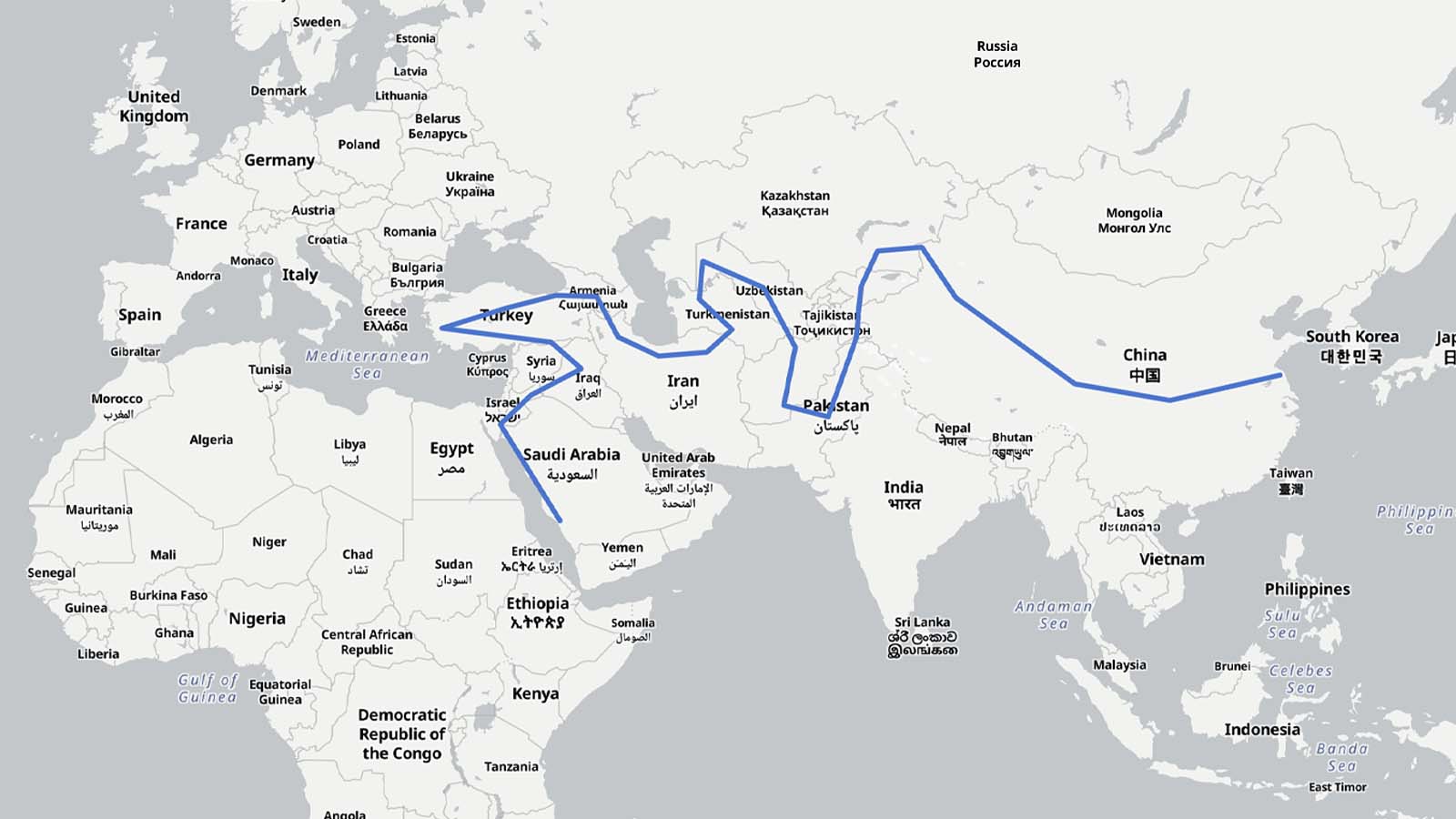
In 2026, I am setting myself a goal
that sounds almost reckless: to cross the entire Eurasian continent by hitchhiking — from Shanghai to Jerusalem. This is not just a route, but a living line through civilizations, religions, languages, and destinies. The journey will pass through China, Kyrgyzstan, Uzbekistan, Tajikistan, Afghanistan, Pakistan, Iran, Turkmenistan, Kazakhstan, Azerbaijan, Georgia, Abkhazia, Turkey, Syria, Lebanon, Jordan, Iraq, and Israel.
I want to see these countries not from the window of a tourist bus, but from the front seat of a truck, in roadside teahouses, in the homes of ordinary people. Hitchhiking is trust. It is a way to hear honest stories, to feel the fears and hopes of those who live on the other side of news headlines.
On this path, anything can happen. Borders may be closed, roads dangerous, and overnight stays unpredictable. In regions with tense political situations, I will have to make decisions daily, balancing risk and common sense. There may be interrogations at checkpoints, long visa waits, lack of connection, language barriers, and complete solitude in the middle of deserts or mountain passes.
But it is precisely in this uncertainty that authentic experience is born. I hope to meet people who will break stereotypes. I hope to see how families live in Afghanistan and Iraq, how traditions are preserved in Iran, how different cultures coexist in the Caucasus and the Middle East. I believe that behind every complicated territory stand real faces — open, warm, and genuine.
My dream is to reach Saudi Arabia, to see Mecca, and to touch the Kaaba. This is not only a geographical goal, but an inner milestone — a symbol of a journey through faith, fear, and respect for another culture.
I want to see these countries not from the window of a tourist bus, but from the front seat of a truck, in roadside teahouses, in the homes of ordinary people. Hitchhiking is trust. It is a way to hear honest stories, to feel the fears and hopes of those who live on the other side of news headlines.
On this path, anything can happen. Borders may be closed, roads dangerous, and overnight stays unpredictable. In regions with tense political situations, I will have to make decisions daily, balancing risk and common sense. There may be interrogations at checkpoints, long visa waits, lack of connection, language barriers, and complete solitude in the middle of deserts or mountain passes.
But it is precisely in this uncertainty that authentic experience is born. I hope to meet people who will break stereotypes. I hope to see how families live in Afghanistan and Iraq, how traditions are preserved in Iran, how different cultures coexist in the Caucasus and the Middle East. I believe that behind every complicated territory stand real faces — open, warm, and genuine.
My dream is to reach Saudi Arabia, to see Mecca, and to touch the Kaaba. This is not only a geographical goal, but an inner milestone — a symbol of a journey through faith, fear, and respect for another culture.
My work is built on trust. I do not chase sensations or distort facts for the sake of a striking shot. Other people’s pain does not become content, and reality is not embellished for views. The truth does not need decoration.
| | Your story matters. If it’s important for you to be heard — write to me. I will listen carefully, we will figure it out together, and I will do my best to make sure your voice does not remain in silence. |